


What is Bimaxillary Surgery (Le Fort I + SSRO)? Effects, Costs, and Downtime Explained

Double jaw surgery can balance the skeletal structure and dramatically change the overall impression of the face.
While many people are interested in it, there are also many who feel anxious about a procedure that involves scalpels and bone shaving.
In this article, for those considering double jaw surgery as one of their options, we thoroughly explain the overview of double jaw surgery, its differences from other bone-cutting surgeries, costs, and downtime.
We will also introduce case examples of double jaw surgery performed at KAI CLINIC TOKYO, so please use this as a reference when moving forward with your consideration.
What is Double Jaw Surgery (Orthognathic Surgery)?
Double jaw surgery is a procedure that detaches both the upper jaw (maxilla) and lower jaw (mandible) and moves and fixes them three-dimensionally to correct bite problems and skeletal facial concerns.
By combining Le Fort I osteotomy and SSRO, it is possible to aim for a beautiful facial line when viewed from a diagonal angle above, as well as a small-face effect.
Le Fort I Osteotomy (Upper Jaw)
Le Fort I osteotomy is a surgery that horizontally cuts the maxilla near the alar base (base of the nostrils) and moves it to the appropriate position, then firmly fixes it using plates and screws for bone fixation.
It is often used for shortening the midface, improving gummy smile (a condition where too much gum shows when smiling), and correcting upper jaw protrusion (buck teeth).
Sagittal Split Ramus Osteotomy (SSRO)
Sagittal split ramus osteotomy is a surgery that splits the mandible in the sagittal direction (vertically) and moves or rotates the lower jaw forward or backward.
With careful consideration for the nerve running inside the lower jaw, the range of movement is safely secured, and improvements in underbite (mandibular prognathism) and facial asymmetry can be expected.
Concerns That Can Be Improved with Double Jaw Surgery
Because double jaw surgery moves the skeletal structure itself, dramatic changes that are considered impossible with soft tissue procedures alone can be expected, such as the following.
- Skeletal underbite (mandibular prognathism):
The lower jaw is moved backward to achieve proper occlusion (bite). - Buck teeth / protruding mouth (gummy mouth):
The positions of the upper and lower jaws are appropriately adjusted to create a beautiful side profile (E-line). - Gummy smile / long face:
Shortening the upper jaw reduces the vertical length of the face and creates an elegant mouth area. - Facial asymmetry:
The amount of movement on each side is adjusted to align the facial midline (center line).
Differences from Other Bone-Cutting Surgeries
While double jaw surgery offers many expected benefits, how does it differ from other bone-cutting surgeries?
Here we introduce the differences from setback surgery and facial contouring 3-point.
Differences from Setback Surgery (Anterior Segmental Osteotomy)
Setback surgery involves extracting the 4th teeth on each side (first premolars) and using that space to set back only the anterior dental bone segment.
Compared to double jaw surgery, which moves the entire jaw, setback surgery specializes in improving "protrusion of the mouth area".
Differences from Facial Contouring 3-Point (Jaw, Cheekbone, Chin)
Facial contouring 3-point involves shaving the bone surface or cutting off the outer edge to reshape the "outer facial line (outline)", and therefore does not affect the bite.
On the other hand, double jaw surgery moves the "foundation of the face (occlusion)" itself, making it possible to simultaneously change both functionality and aesthetics.
Double Jaw Surgery Cases at KAI CLINIC TOKYO
At KAI CLINIC TOKYO, we have provided double jaw surgery to many patients concerned about their facial contour.
Here we introduce some cases of double jaw surgery performed at our clinic.
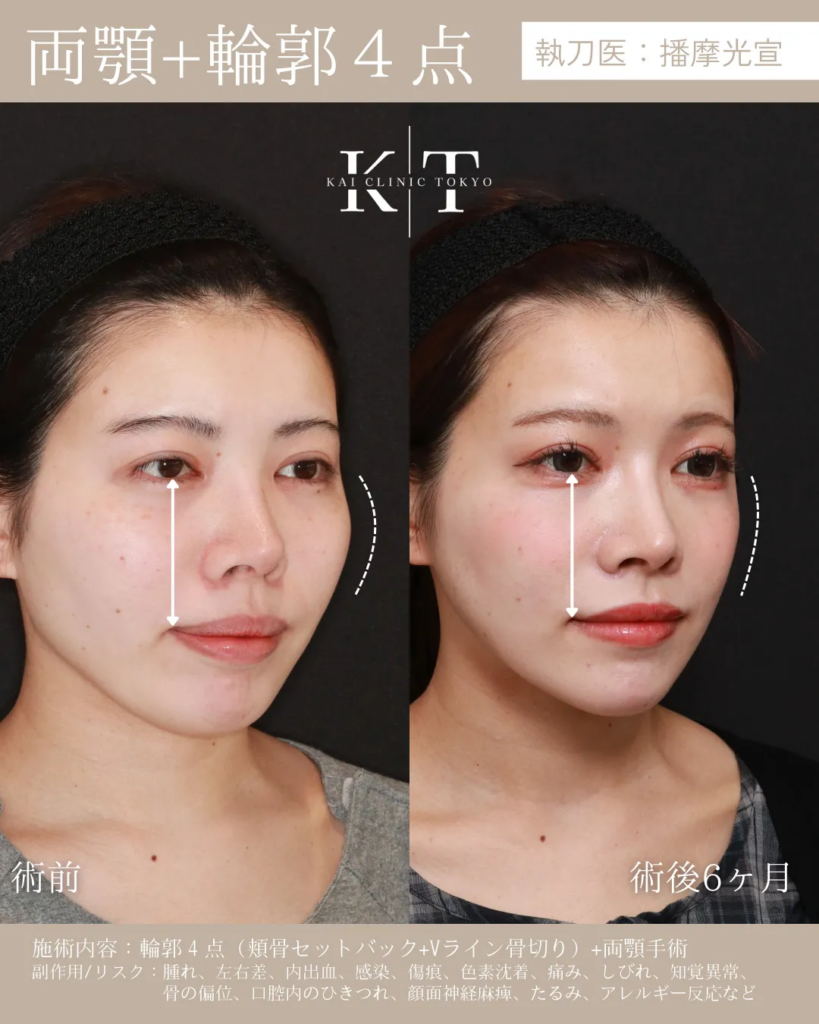
Double Jaw + 4-Point Facial Contouring
【Surgeon】
Mitsunobu Harima
【Treatment Details & Fees】
Double jaw surgery (upper and lower jaw osteotomy): ¥2,970,000, 4-point facial contouring (zygoma setback + V-line osteotomy): ¥2,970,000
※Monitor pricing is also available
【Risks & Side Effects】
Swelling, asymmetry, bruising, infection, scarring, hyperpigmentation, pain, numbness, sensory abnormalities, bone deviation, oral tightness, facial nerve palsy, sagging, allergic reactions, etc.
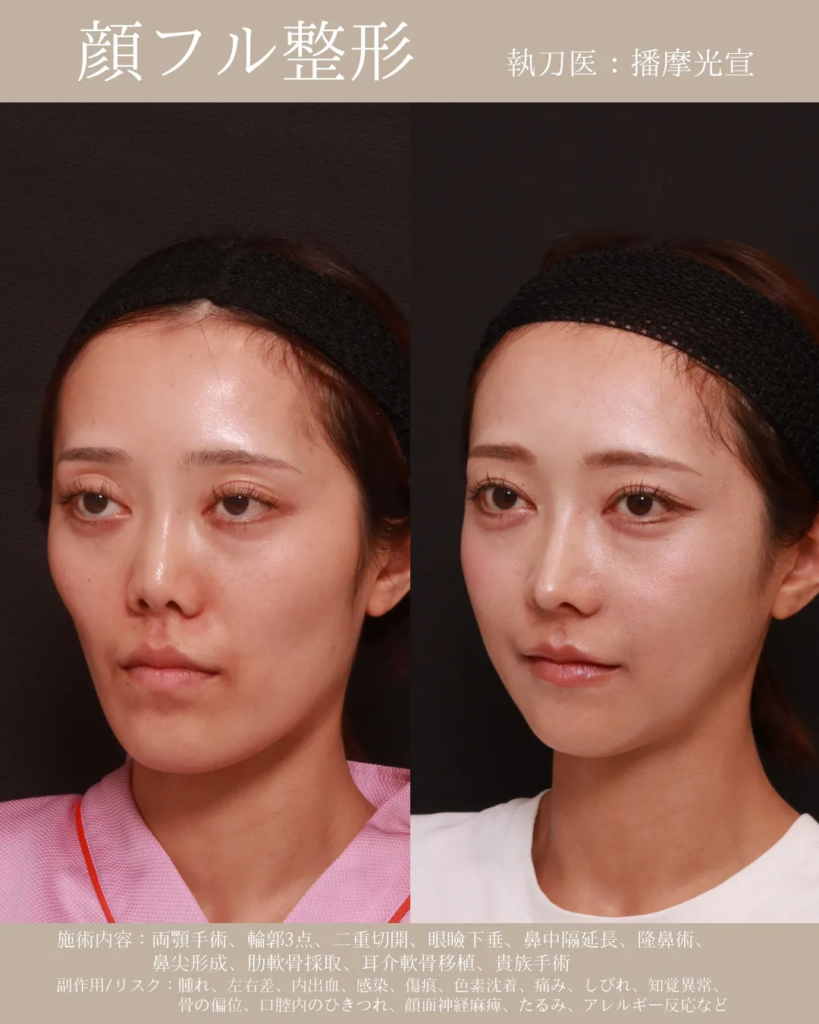
Full Face Surgery
【Surgeon】
Mitsunobu Harima
【Treatment Details & Fees】
Double jaw surgery: ¥2,970,000, 3-point facial contouring: ¥2,530,000, ptosis repair + double eyelid incision: ¥770,000, septal extension: ¥495,000, rhinoplasty: ¥330,000, tip plasty: ¥330,000, costal cartilage harvesting: ¥660,000, auricular cartilage graft: ¥165,000, alarplasty: ¥275,000
※Monitor pricing is also available
【Risks & Side Effects】
Swelling, asymmetry, bruising, infection, scarring, hyperpigmentation, pain, numbness, sensory abnormalities, bone deviation, oral tightness, facial nerve palsy, sagging, allergic reactions, etc.
【Important】Downtime, Risks & Side Effects of Double Jaw Surgery
Because double jaw surgery is a large-scale procedure requiring advanced skill, it is essential to properly understand the postoperative course and risks.
Here we introduce the downtime, risks, and possible side effects.
Recovery & Downtime Timeline
The recovery and downtime for double jaw surgery are as follows.
- 2–3 days after surgery:
The peak period of most pronounced swelling and bruising - Up to 1 month:
Symptoms gradually subside and you can appear in public. A guideline for returning to work or school - Up to 6 months:
Tissue swelling completely subsides
Risks & Side Effects
The following complications may occur after surgery.
| Swelling | Asymmetry | Bruising | Infection |
| Scarring | Hyperpigmentation | Foreign body reaction | Pain |
| Numbness | Sensory abnormalities | Hair loss | Tissue necrosis |
| Visual disturbance | Facial nerve damage | Allergic reaction | Shock reaction |
Key Points for Choosing a Clinic to Avoid Regret After Double Jaw Surgery
As mentioned above, advanced skill is indispensable for double jaw surgery, and choosing the right clinic is extremely important to avoid regret.
Does the Clinic Have In-Depth Knowledge of "Relapse" Risk and Take Preventive Measures?
In double jaw surgery, particularly when advancing the lower jaw or correcting asymmetry, the pulling force of muscles can cause the bone to relapse by a few millimeters.
While the risk is low because the bone is firmly fixed, forces attempting to move the bone back are applied for about one year after surgery, so it is important to choose a clinic that rigorously applies specialized techniques and measures to prevent relapse.
Reliable Skill from a Plastic Surgery Specialist and 3D Simulation
Whether a board-certified plastic surgeon with thorough anatomical knowledge of facial bone structure, muscles, nerves, and blood vessels performs the surgery is a critical checkpoint.
Also, always confirm whether the clinic has the facilities to predict and plan using 3D simulation based on CT imaging.
Does the Clinic Explain Risks and Limitations Transparently?
Because double jaw surgery is a very large-scale procedure, even those considering it cannot easily have their anxieties dispelled.
To help alleviate these concerns even slightly, resolving questions and anxieties during a pre-operative consultation and choosing a clinic where you can discuss matters until fully satisfied helps prevent post-surgery regret of "this isn't what I expected."
To that end, always confirm whether there are doctors who will thoroughly explain the disadvantages, including the skeletal limitations specific to each patient, risks such as nerve palsy, and the difficulty of the downtime period.
If You Are Considering Double Jaw Surgery, Please Consult KAI CLINIC TOKYO
KAI CLINIC TOKYO meets all three points introduced in "Key Points for Choosing a Clinic," and we carefully provide individualized consultations for each patient before proposing a post-surgical image.
We provide double jaw surgery by making full use of our continuously refined advanced medical techniques and knowledge.
In addition, we do not simply perform surgery; we are thorough in our post-operative follow-up, and we have a system in place where patients can consult us at any time if they have even the slightest concern.
If you are considering changing your facial contour and achieving the beauty you desire, please feel free to book a counseling appointment via LINE.
Summary
Double jaw surgery, which brings significant changes to facial contours, is a procedure where advanced technical skill and a concrete post-operative vision based on extensive case experience are essential.
KAI CLINIC TOKYO has a proven track record of performing numerous double jaw surgeries.
We also provide advanced techniques and thorough aftercare to help each patient achieve their ideal beauty.
If you have any concerns or questions about double jaw surgery and are considering taking a new step forward with the procedure, please feel free to consult with our clinic.
Supervisor of this article
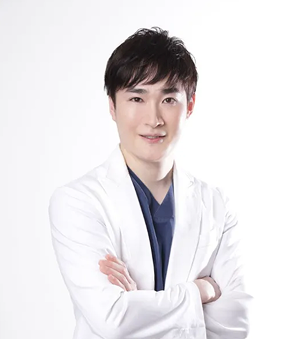
Director Mitsunobu Harima
Academic Affiliations
Japan Society of Plastic and Reconstructive Surgery
Japan Society of Aesthetic Plastic Surgery (JSAPS)
Titles & Certifications
Board-Certified Member of the Japan Society of Plastic and Reconstructive Surgery
Board-Certified Member of the Japan Society of Aesthetic Plastic Surgery (JSAPS)
Career
-
Graduated from the Faculty of Medicine, University of Tokyo
-
Nadogaya Hospital — Initial Resident Physician
-
University of Tokyo Hospital — Department of Plastic & Aesthetic Surgery, Special Clinical Physician
-
University of Tokyo Hospital — Department of Plastic & Aesthetic Surgery, Assistant Professor
-
Kanto Central Hospital — Department of Plastic Surgery
-
Tokyo Metropolitan Police Hospital — Department of Plastic & Aesthetic Surgery
-
Kato Clinic ANNEX — Appointed as Director
-
KAI CLINIC TOKYO — Appointed as Director