


Types of Genioplasty and Concerns It Can Improve | Downtime and Risks Explained

"Genioplasty" is a cosmetic surgery procedure that cuts and shaves the bone at the tip of the chin to reshape the facial line.
Many people are interested but feel anxious about having their bones cut, and find it difficult to take the first step.
This article is aimed at those who are considering bone cutting to achieve their ideal facial line, and provides a thorough explanation of the overview of genioplasty, the risks of downtime, and possible side effects.
We will also introduce cases from Kai Clinic Tokyo, which provides aesthetic medicine to fulfill the hopes of all those who pursue beauty, so please use this as a reference if you are considering taking a new step with genioplasty.
What is Genioplasty?
Genioplasty is a cosmetic surgical procedure that reshapes the form and position of the tip of the chin (mentum).
There are two types: "bone shaving surgery" and "bone cutting surgery," and depending on each patient's bone structure and wishes, the procedures are performed individually or in combination.
It is possible to improve concerns such as chin length, forward or backward protrusion, and asymmetry, and to shape an E-line and sharp facial contour.
Concerns That Can Be Improved with Genioplasty
The main concerns that can be expected to improve with genioplasty include the following.
- Those whose chin is small or appears recessed backward
- Those whose chin protrudes forward
- Those whose chin is long and gives a long-faced impression
- Those who have asymmetry in the chin or whose chin is tilted to one side
- Those whose E-line in profile is disrupted
Types of Genioplasty
There are four types of genioplasty as follows.
- Horizontal Osteotomy
- T-Shape Osteotomy
- Tubercle Osteotomy
- Trapezoid Osteotomy
Please note that at Kai Clinic Tokyo, we use the "Trapezoid Osteotomy" method from the above options.
Horizontal Osteotomy
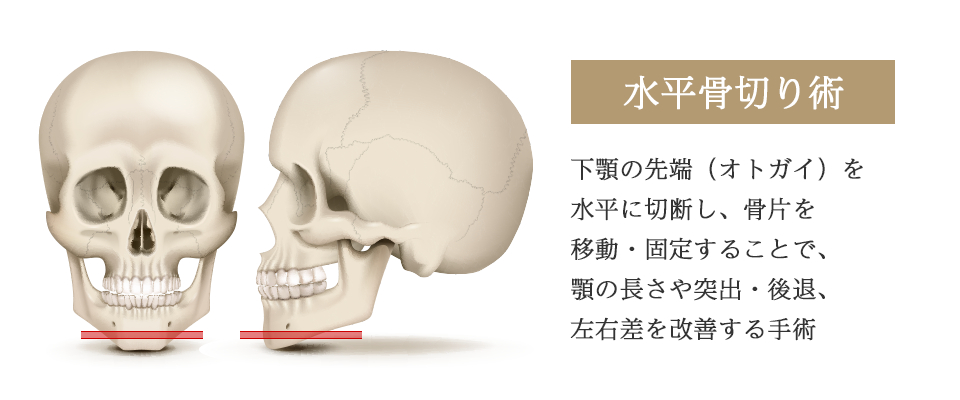
"Horizontal Osteotomy" is a surgery that horizontally cuts the tip of the lower jaw (mentum) and then moves and fixes the bone fragment to improve chin length, protrusion, recession, and asymmetry.
T-Shape Osteotomy
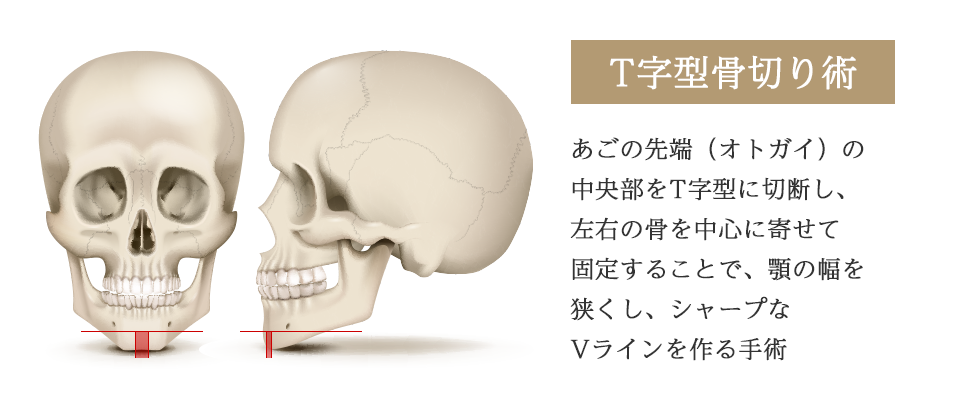
"T-Shape Osteotomy" is a surgery that cuts the central part of the chin (mentum) in a T-shape, brings the left and right bone segments toward the center, and fixes them to narrow the width of the chin and create a sharp V-line.
Tubercle Osteotomy
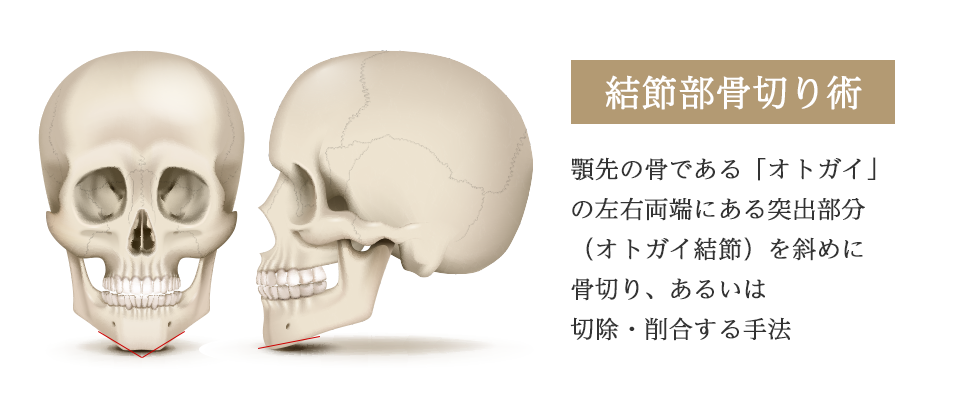
"Tubercle Osteotomy" is a technique for obliquely cutting, or resecting and shaving, the protruding portions (mental tubercles) on both sides of the chin bone (mentum).
Trapezoid Osteotomy
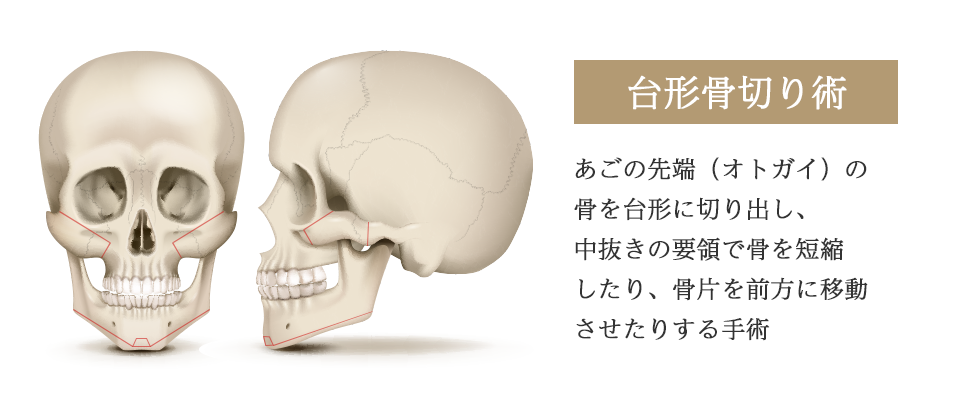
The "trapezoidal osteotomy" adopted by Kai Clinic Tokyo is a procedure in which the chin (mentum) bone is cut out in a trapezoidal shape, and the bone is shortened by hollowing out the center or the bone fragment is moved forward.
Downtime Guidelines and Risks of Genioplasty
Even if you have concerns about your facial contour, many people worry about the downtime and risks of genioplasty, which directly addresses the bone.
Here we introduce the estimated downtime and risks associated with genioplasty.
Estimated Downtime for Genioplasty
The estimated downtime for genioplasty is as follows.
- 2–3 days after surgery: Period of most pronounced swelling and bruising
- Up to 2 weeks: Symptoms gradually subside; presentable in public
- Up to 3 months: Complete resolution
Estimated Return to Work
For desk work with minimal physical strain, where those around you would understand if they knew about the surgery, returning to work approximately 2 days to 1 week after the procedure is a general guideline.
On the other hand, for those in sales or customer-facing roles who wish to return without others noticing, approximately 1 month is the general guideline.
*Even for desk work, if you do not want others to know, the same timeframe as for sales or customer-facing roles applies.
*In environments where wearing a mask is possible, it becomes less likely that others will notice.
Risks and Side Effects of Genioplasty
Genioplasty carries the following risks and side effects.
| Swelling | Asymmetry | Bruising | Infection |
| Scarring | Hyperpigmentation | Foreign body reaction | Pain |
| Numbness | Sensory abnormality | Hair loss | Tissue necrosis |
| Visual disturbance | Facial nerve disorder | Allergic reaction | Complications such as shock reaction |
*The manner in which symptoms appear, their progression, and the recovery process vary between individuals.
How to Choose a Clinic to Avoid Failure with Genioplasty
Genioplasty significantly changes the impression of the facial contour and cannot be reversed once performed.
Therefore, choosing the right clinic is extremely important to avoid regret from a failed outcome.
Extensive Surgical Experience and Diversity of Cases in Osteotomy
Rather than simply choosing based on the number of surgeries performed, please make sure to confirm whether the clinic handles a wide range of cases, from standalone chin (mentum) surgery to complex procedures such as 3-point and 4-point facial contouring.
When reviewing case photos, it is important not only to check the front view but also to verify that the profile and diagonal lines are smooth and free of unnatural steps (secondary angles), and to choose a clinic where you can examine the fine details of the results.
Reliable Techniques by a Plastic Surgery Specialist and 3D Simulation
Genioplasty requires extremely delicate technique.
Therefore, be sure to confirm whether a "plastic surgery specialist" who has an anatomical mastery of the facial bone structure, muscles, nerves, and blood vessel pathways will perform the surgery.
Also, confirm whether the clinic has equipment capable of predicting and planning using 3D simulation with CT imaging.
Whether Risks and Limitations Are Explained Transparently
Whether the clinic has a physician who thoroughly explains the disadvantages, including the limitations of each patient's bone structure, risks such as nerve palsy, and the difficulty of the downtime period, is also an important checkpoint.
By resolving any questions or concerns during the pre-surgery consultation and choosing a clinic where you can discuss matters until you are fully satisfied, you can prevent post-surgery regret of "this is not what I expected."
Case Introductions Including Genioplasty at Kai Clinic Tokyo
V-Line Contouring
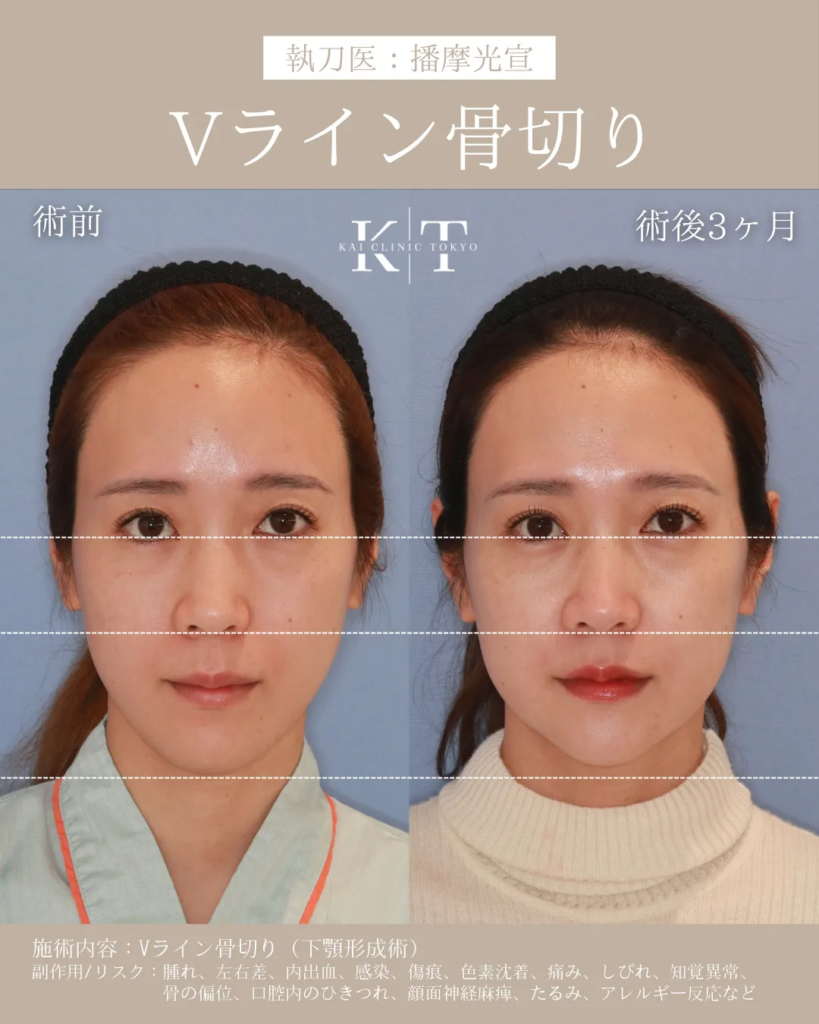
【Surgeon】
Mitsunobu Harima
【Treatment Details / Fee】
V-Line Contouring: ¥1,694,000
*A monitor program is also available, so please feel free to consult us.
【Risks / Side Effects】
Swelling, asymmetry, bruising, infection, scarring, hyperpigmentation, pain, numbness, sensory abnormality, bone displacement, intraoral tightening, facial nerve palsy, sagging, allergic reaction, etc.
4-Point Facial Contouring (Cheekbone Setback + V-Line Contouring)
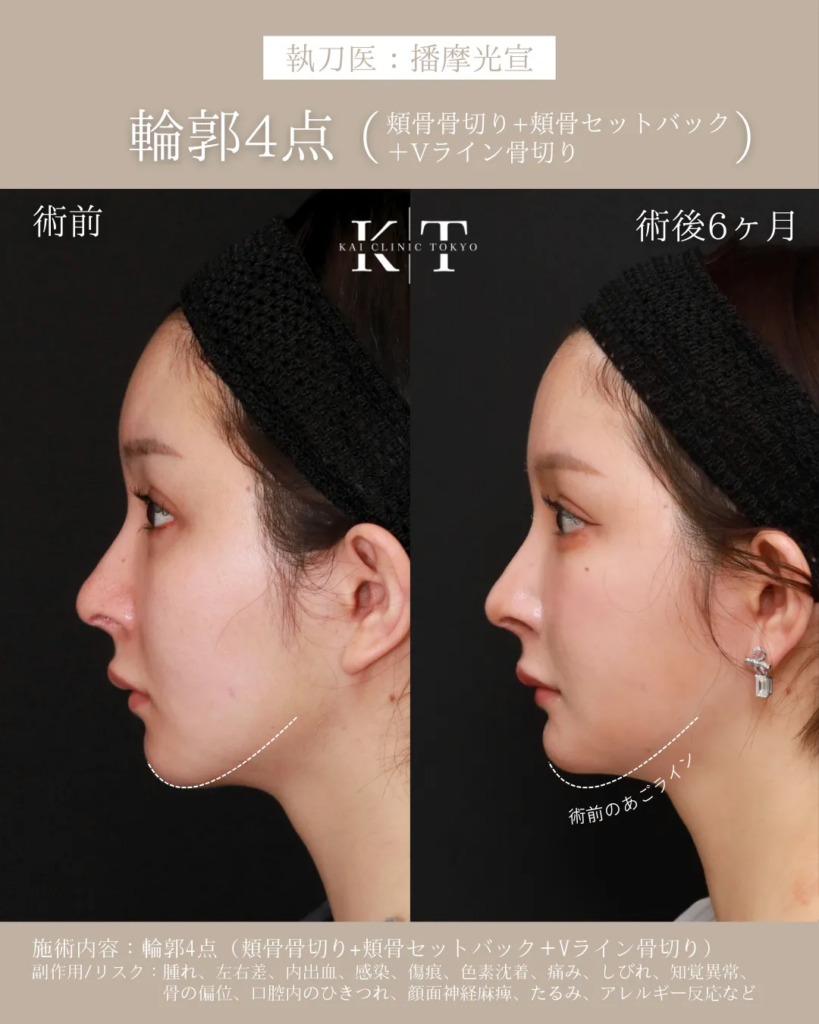
【Surgeon】
Mitsunobu Harima
【Treatment Details / Fee】
4-Point Facial Contouring (Cheekbone Setback + V-Line Contouring): ¥2,970,000
【Risks / Side Effects】
Swelling, asymmetry, bruising, infection, scarring, hyperpigmentation, pain, numbness, sensory abnormality, bone displacement, intraoral tightening, facial nerve palsy, sagging, allergic reaction, etc.
If You Are Considering Genioplasty, Please Consult Kai Clinic Tokyo
At Kai Clinic Tokyo, rather than simply reducing the size of the face, our plastic surgery specialists — backed by experience from numerous cases and a proven track record — will assess the overall balance of your face and propose a post-surgical image tailored specifically to you.
We also maintain a thorough post-operative aftercare system, and we have an official LINE account where you can consult us about any concerns at any time.
"I have a complex about my face line…"
"I want to have genioplasty, but I'm worried about whether it will turn out the way I imagine…"
If you have any of these concerns, please feel free to contact our clinic for a consultation.
Summary
Genioplasty, which reshapes the face line by cutting or shaving the chin bone, can resolve complexes about the face line and help you achieve your ideal beauty.
However, in order to achieve the face line you envision, choosing the right clinic is extremely important—including the doctor's skill and experience, as well as post-operative aftercare.
At Kai Clinic Tokyo, our doctors with extensive experience and a proven track record carefully listen to each patient's concerns, confirm the overall balance of the face, and propose a post-operative image tailored to you.
We also have a comprehensive aftercare system where you can consult us about any post-operative concerns at any time, so if you are troubled by a face line you would like to improve, please feel free to contact our clinic.
Supervisor of This Article

Director Mitsunobu Harima
Academic Societies
Japan Society of Plastic and Reconstructive Surgery
Japan Society of Aesthetic Plastic Surgery (JSAPS)
Titles & Qualifications
Specialist, Japan Society of Plastic and Reconstructive Surgery
Specialist, Japan Society of Aesthetic Plastic Surgery (JSAPS)
Career
-
Graduated from the Faculty of Medicine, University of Tokyo
-
Nado-ga-ya Hospital, Initial Resident Physician
-
University of Tokyo Hospital, Department of Plastic & Aesthetic Surgery, Special-Appointment Clinical Physician
-
University of Tokyo Hospital, Department of Plastic & Aesthetic Surgery, Assistant Professor
-
Kanto Central Hospital, Department of Plastic Surgery
-
Tokyo Metropolitan Police Hospital, Department of Plastic & Aesthetic Surgery
-
Appointed Director of Kato Clinic ANNEX
-
Appointed Director of Kai Clinic Tokyo