


What is the Zygomatic Arch? Causes of Protrusion and Fundamental Improvement Methods

Many people feel that their face looks "too wide" or their "eyes look small" every time they look in the mirror.
What influences that impression is the "zygomatic arch," which runs from the temple to the area in front of the ear.
The zygomatic arch is one of the skeletal structures that shape the facial contour, and the degree to which it protrudes greatly changes the overall appearance of the face.
This article provides an easy-to-understand explanation of the location and role of the zygomatic arch, the causes of its protrusion, fundamental improvement methods, and how to choose a clinic.
What Is the Zygomatic Arch?
The zygomatic arch is an important skeletal feature that determines the width of the face.
Here, we will explain the location, role, and influence of the zygomatic arch on facial impression in order.
Location of the Zygomatic Arch
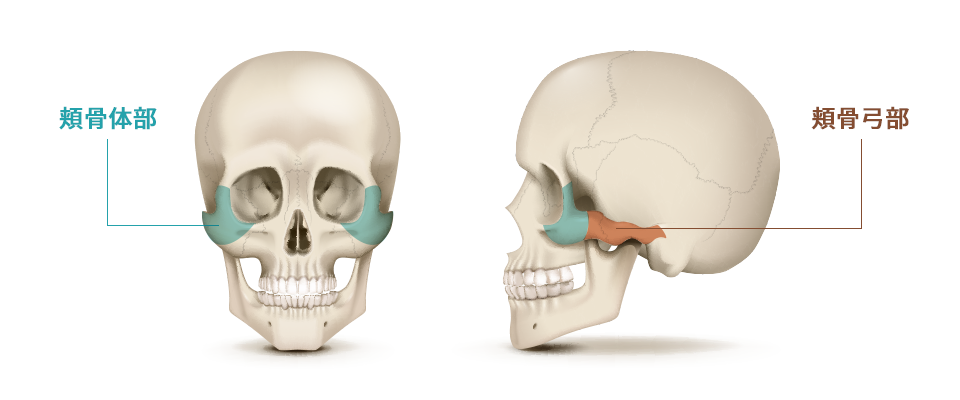
The zygomatic arch refers to the arch-shaped (arch-like) bony structure connecting the cheekbone and the temporal bone. It is located in front of the ear and around the temple, and is the most laterally protruding part of the facial skeleton.
The distance between the zygomatic arches on both sides (zygomatic arch width) serves as the reference for determining the width of the face. Therefore, the degree to which the zygomatic arch protrudes directly affects the perceived size of the face.
Role of the Zygomatic Arch
The zygomatic arch serves as the attachment point for the temporalis and masseter muscles, which are involved in chewing, and plays a role in supporting the act of biting.
Therefore, the zygomatic arch both shapes the facial contour and acts as the foundation supporting the everyday action of chewing food.
Difference from the Zygomatic Body
The cheekbone consists of two parts: the "zygomatic body" and the "zygomatic arch," and the direction of protrusion changes how the face looks.
When the face looks wide from the side, the zygomatic arch is often involved; when the height of the cheek is prominent from the front or at an angle, the zygomatic body is often the contributing factor.
【Differences between the Zygomatic Body and the Zygomatic Arch】
| Part | Location | Direction of Protrusion | Facial Impression |
| Zygomatic Body | Front of the cheek, prominence below the eye | Forward protrusion | Cheeks appear angular when viewed from the front or at an angle |
| Zygomatic Arch | Arch from the temple to in front of the ear | Lateral protrusion | Face appears wider and larger |
Identifying which issue is closer to your own concern is the first step toward choosing the appropriate improvement method.
Impact on Facial Impression
When the zygomatic arch protrudes laterally, the face appears wider, making the entire face look larger.
Impressions caused by zygomatic arch protrusion include the following:
- A rugged, masculine appearance
- A sharp or cold impression
- An aged look where the cheekbones become more prominent over time
Furthermore, when the face appears wide, an optical illusion (Ebbinghaus illusion) tends to make the eyes look relatively smaller. Many people are troubled by the feeling that their "face looks large" or their "eyes look small" even when they are satisfied with the shape of their eyes and nose.
As such, the zygomatic arch is a feature that greatly influences the overall balance of the face, making it important to consider it from a holistic perspective.
Causes of Zygomatic Arch Protrusion
Zygomatic arch protrusion is influenced not only by one's innate skeletal structure but also by daily habits.
Here, we explain the main causes of zygomatic arch protrusion.
Genetic Skeletal Structure
The prominence of the zygomatic arch is largely influenced by one's innate skeletal structure.
East Asians tend to have a greater curve in the zygomatic arch compared to Westerners, and many have a skeletal structure that protrudes laterally.
Therefore, if close relatives such as parents or grandparents share similar facial contour characteristics, it is possible that the zygomatic arch is genetically well-developed.
Clenching and Teeth-Grinding Habits
Unconscious clenching and teeth-grinding also affect the appearance around the zygomatic arch.
The masseter muscle, which is involved in chewing, attaches to the zygomatic arch. If you have a habit of clenching strongly, the masseter develops and the area around the cheekbone becomes more prominent.
For example, clenching tends to occur in the following situations.
- When concentrating on a task
- When feeling stressed or tense
- During sleep (teeth grinding)
- When operating a smartphone for long periods
Facial Asymmetry and Posture Habits
Postures and habits repeated in daily life can disrupt the balance of the facial muscles (such as the masticatory muscles).
When a left-right difference develops in how muscles are built up, it leads to facial asymmetry, causing the zygomatic arch protrusion to appear asymmetrically prominent on one side.
The following are habits to be mindful of.
- Resting your chin on your hand on the same side each time
- Always crossing your legs with the same leg on top
- Chewing only on one side during meals
- Having a habit of sleeping face-down or on your side
- Carrying a bag on only one shoulder
Reduction in Cheek Volume Due to Aging
The zygomatic arch also becomes more noticeable with age. As we get older, the fat in the cheeks and temples gradually decreases, and the skin loses its firmness.
As a result, the cheekbones that were previously covered with fullness appear to protrude relatively more, making the zygomatic arch prominence more visible.
Aesthetic Medical Treatments for Fundamental Improvement of the Zygomatic Arch at KAI Clinic Tokyo
In many cases, the protrusion of the zygomatic arch is caused by the skeletal structure itself, and aesthetic medical treatment becomes an option for fundamental improvement.
Here, we introduce the aesthetic medical treatments offered by KAI Clinic Tokyo for those concerned about zygomatic arch protrusion.
Zygomatic Osteotomy
Zygomatic osteotomy is a procedure in which the zygomatic body and arch are cut, moved toward the center of the face, and fixed in place. Any step-off created by the movement is carefully smoothed down and securely fixed with plates.
With consideration for post-operative sagging, you can aim for a smooth and natural facial contour.
- Downtime: Swelling and bruising are most noticeable 1–2 weeks after surgery, but gradually subside, and it takes approximately 3 months to fully settle.
- Risks and side effects: Swelling, asymmetry, bruising, infection, scarring, hyperpigmentation, pain, numbness, sensory abnormalities, bone displacement, intraoral tightness, facial nerve palsy, sagging, allergic reactions, etc.
Zygomatic osteotomy is suitable for the following individuals.
- Those who want to significantly reduce the width of their face
- Those concerned about protrusion of the cheekbone in the forward and lateral directions
- Those who want to soften a angular facial contour into a gentler impression
Zygomatic Setback
Zygomatic setback is a procedure in which the cheekbone is cut at multiple points and the entire zygomatic complex is moved inward and backward (set back) to improve cheek protrusion and facial width.
By moving the cheekbone backward, a smooth small-face effect can be expected, and since a wider area can be moved at once compared to standard cheekbone surgery, the facial contour can be reshaped three-dimensionally.
- Downtime: Swelling and bruising are most noticeable 2–3 days after surgery, gradually subsiding within about 2 weeks to a presentable state. It takes approximately 3 months to fully settle.
- Risks and side effects: Complications such as swelling, asymmetry, bruising, infection, scarring, hyperpigmentation, foreign body reaction, pain, numbness, sensory abnormalities, hair loss, tissue necrosis, visual disturbance, facial nerve damage, allergic reactions, and shock reactions may occur.
Zygomatic setback is suitable for the following individuals.
- Those who want to soften the overall three-dimensionality of their face
- Those concerned about both lateral and forward protrusion of the cheekbone
- Those who want to achieve a clean, streamlined facial contour
How to Choose a Clinic to Address Zygomatic Arch Concerns
Zygomatic arch osteotomy requires a high level of skill, so the choice of clinic greatly influences the outcome.
Here, we introduce four points to check when choosing a clinic.
Whether a Board-Certified Plastic Surgeon Is on Staff
Zygomatic arch osteotomy is a highly advanced surgical procedure that requires thorough knowledge of the skeletal structure as well as nerves and muscles. Choose a clinic that has a board-certified plastic surgeon with extensive experience in handling bone structures and a deep understanding of anatomy.
Check the doctor's profile on the clinic's official website and verify their specialist qualifications and background in advance.
Whether They Design the Balance of the Entire Face
It is essential to view the zygomatic arch not in isolation, but as part of an overall facial design.
Choose a clinic that designs treatments with consideration for the harmony of all facial features, including the eyes, nose, mouth, and facial contour.
One indicator is whether the clinic provides advice on your overall facial impression during the consultation.
Thoroughness of the Consultation
Since osteotomy involves downtime and risks, choose a doctor who explains not only the benefits but also the drawbacks carefully.
If you can resolve any questions or concerns on the spot and discuss them until you are fully satisfied, you can entrust yourself to the clinic with confidence.
Whether the doctor refrains from pushing procedures unnecessarily and respects the patient's wishes is also a criterion for identifying a trustworthy physician.
Whether After-Care Support Is Well Established
After-care support following osteotomy is also an important element that supports the outcome. Confirm whether the clinic has a well-established after-care system, including monitoring progress during the downtime and addressing post-operative concerns.
If there is a system in place where you can quickly consult whenever you have concerns after the procedure, you can go through the recovery period with peace of mind.
Zygomatic Arch Osteotomy at KAI Clinic Tokyo
【4-Point Facial Contouring (Zygomatic Setback + V-Line Contouring)】
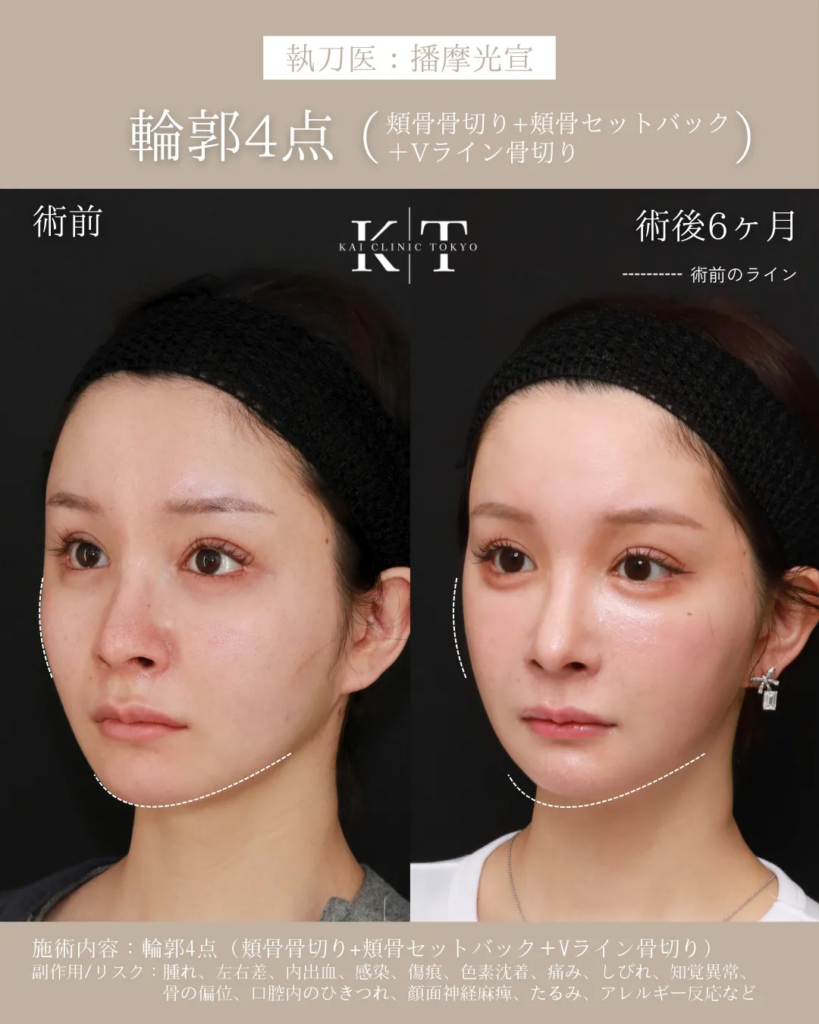
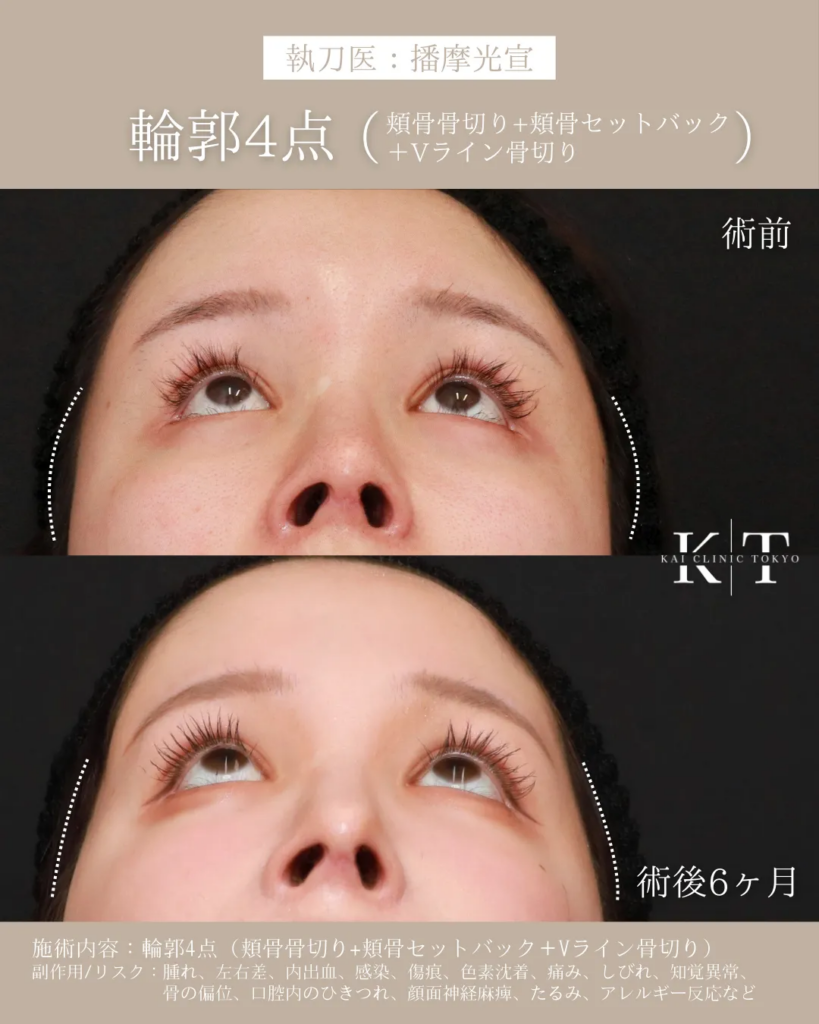
【Surgeon】
Mitsunobu Harima
【Treatment Details】
Facial Contour 4-Point (Cheekbone Setback + V-Line Formation)): ¥2,970,000
※A monitor program is also available, so please feel free to contact us.
【Risks & Side Effects】
Swelling, asymmetry, bruising, infection, scarring, hyperpigmentation, pain, numbness, sensory abnormalities, bone deviation, oral tightness, facial nerve palsy, sagging, allergic reactions, etc.
If you are concerned about your zygomatic arch, please consult KAI Clinic Tokyo
At KAI Clinic Tokyo, we carefully assess the facial balance of each individual patient and propose treatments tailored to their wishes.
In addition, we do not simply perform the treatment and leave it at that — we also maintain a system where patients can consult us at any time about post-operative concerns.
"I am bothered by the width of my face."
"I have a complex about my eyes looking small."
If you have concerns like these, please feel free to consult our clinic.
Summary
The lateral protrusion of the zygomatic arch can make the face appear larger and also create an optical illusion that makes the eyes look smaller.
There are various causes of protrusion, but when the skeletal structure itself is the cause, a surgical approach through cosmetic medicine is necessary.
At KAI Clinic Tokyo, specialists well-versed in skeletal anatomy propose treatments for those troubled by zygomatic arch protrusion, taking into account the overall balance of the face.
If you are troubled by zygomatic arch protrusion, please book a counseling appointment via LINE.
KAI Clinic Tokyo is here to help you achieve the beauty you seek.
Article Supervisor

Director Mitsunobu Harima
Academic Memberships
Japan Society of Plastic and Reconstructive Surgery
Japan Society of Aesthetic Plastic Surgery (JSAPS)
Titles & Qualifications
Japan Society of Plastic and Reconstructive Surgery Specialist
Japan Society of Aesthetic Plastic Surgery (JSAPS) Specialist
Career
-
Graduated from the Faculty of Medicine, University of Tokyo
-
Nado-ga-ya Hospital, Initial Resident Physician
-
University of Tokyo Hospital, Department of Plastic & Reconstructive Surgery and Cosmetic Surgery, Special Clinical Physician
-
University of Tokyo Hospital, Department of Plastic & Reconstructive Surgery and Cosmetic Surgery, Assistant Professor
-
Kanto Central Hospital, Department of Plastic Surgery
-
Tokyo Metropolitan Police Hospital, Department of Plastic & Reconstructive Surgery and Cosmetic Surgery
-
Kato Clinic ANNEX, Appointed as Director
-
KAI Clinic Tokyo, Appointed as Director