



Alar reduction is a surgery that reduces the size and width of the nasal alae to create a well-balanced nose shape. Wide or flared nasal alae (“agura-bana” in Japanese) are a common feature of East Asian noses.
Recommended for those with these concerns:
- Width of the nasal alae
- Size of the nose
- Size of the nostrils
Although the internal approach leaves less noticeable scars, there are cases where it is better to choose the external or the combined internal and external approach. Specifically:
• If the outer side of the alae flares out beyond the width of the alar base, the external approach is used.
• If the alar base is wide, the internal approach is used.
• If both are present, the combined internal and external approach is used.
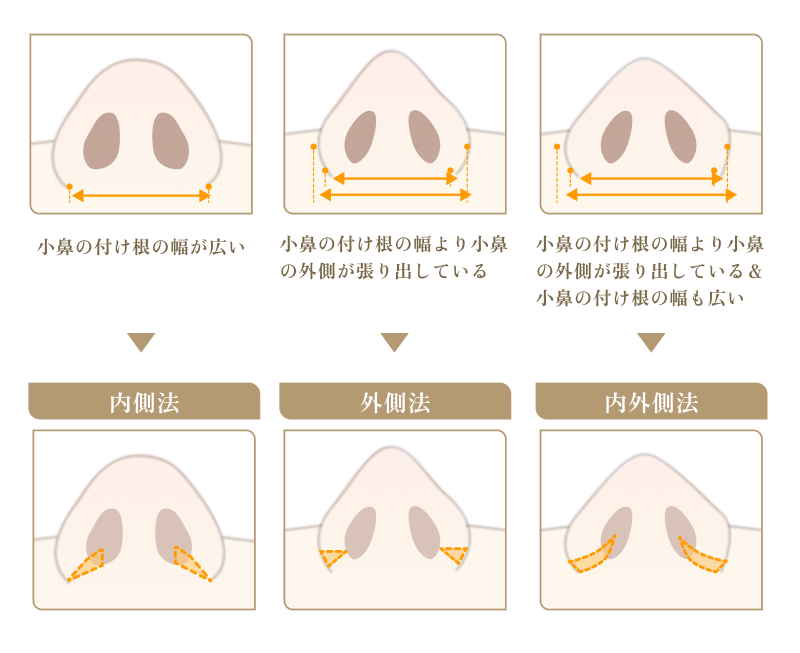
Center: The outer side of the alae flares out wider than the alar base → External Approach
Right: The outer side of the alae flares out wider than the alar base and the alar base is also wide → Combined Internal and External Approach
The flap method is an additional technique used to enhance the result and reduce the chance that the alae widen again after surgery. Since it is performed in combination with the external, internal, or combined internal and external approach, please consult with us before the procedure.
Procedure Details
Internal Approach
This is a method of excising tissue from the inside of the nostrils. A portion of the inside of the nostrils is excised and sutured together to make the nasal opening smaller. A major advantage is that the scars are not visible from the outside.
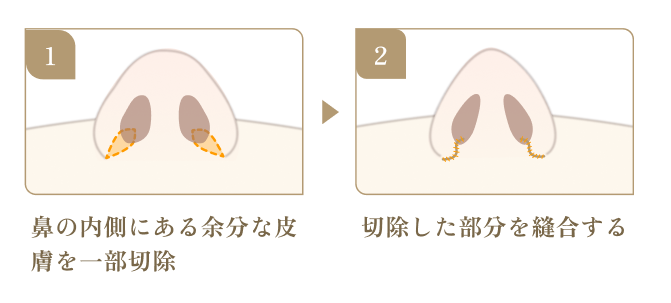
2. The excised area is sutured.
External Approach
This is a method of excising the bulging outer portion of the nasal alae. Skin is excised along the outer line of the nasal alae to reduce alar flaring. This approach is suitable if you want to reduce the width more significantly.
Combined Internal and External Approach
This method combines the internal and external approaches. Both the inside and outside of the nostrils are excised to achieve a well-balanced reduction. The overall volume, width, and nostril size of the entire alar area can be comprehensively adjusted.

Recovery and Aftercare
Swelling and Bruising
Swelling and bruising are most noticeable for the first 1–2 weeks after surgery. The nose continues to settle for about 3 months, after which the final shape is visible.
Daily Life
Please sleep on your back so that no strong external force is applied to the nose.
Please also avoid touching or wetting the surgical site for the first week, or until your doctor tells you it is safe to do so.
Risks and Side Effects
Risks and side effects include swelling, bruising, pain, edema, redness, scarring, infection, and asymmetry.